Be yourself; Everyone else is already taken.
— Oscar Wilde.
This is the first post on my new blog. I’m just getting this new blog going, so stay tuned for more. Subscribe below to get notified when I post new updates.
Intricacies of the Solar System
Be yourself; Everyone else is already taken.
— Oscar Wilde.
This is the first post on my new blog. I’m just getting this new blog going, so stay tuned for more. Subscribe below to get notified when I post new updates.

It’s pretty perplexing as to why Saturn’s moon, Titan, has such a thick atmosphere but a planet like Mars does not. Since the most widely accepted explanation of why Mars has such a thin atmosphere is it losing its magnetosphere as its core cooled and does not contain nearly as much metallic iron has the Earth’s, it would make sense that Titan would follow the same pattern since it doesn’t have a magnetosphere. The explanation behind this discrepancy is due to the composition of Titan’s atmosphere. Since Titan’s atmosphere is almost entirely nitrogen and nitrogen is able to withstand the lower amounts of solar radiation that Titan receives relative to Mars even without a magnetosphere, Titan is able to maintain an atmosphere of nitrogen. This also explains why Titan wouldn’t have any oxygen, since this is not true for oxygen molecules as they would be broken up by this radiation. This also explains the situation on Mars, since it was believed to once have oxygen, but due to losing its magnetosphere the oxygen was then broken apart and most likely bonded with the iron on the surface, giving it its red tint. The only thing left unexplained is why Mars or the other large Jovian moons lack the nitrogen that Titan and Earth have. Information from this blog and more detailed information on this subject is found in this video.

If a large solar flare were to directly hit the Earth, it would significantly affect all of the electronics on Earth. Us being so dependent on electronics, this would be crippling to essentially all forms of communications, payment and many other important functions of life. Most cars would shut down due to many new cars having electronic transmissions. The giant solar storm hitting Earth would be one massive electromagnetic pulse, first hitting all satellites which would knock out communications, and then moving on to all the electronics on the surface of the Earth. Luckily, we have preventative systems in place to warn us several days in advance if something like this were to happen. NASA has a satellite designated to report any activity that would hint at the possibility of a solar flare hitting us directly, so we would have several days to prepare. Things we would do to limit the effects of these solar flares would be things like shutting down satellites and shutting down transformers. If we were to not predict an event like this several days in advance, after hitting the first satellite we would have about thirty minutes before the solar storm reached the Earth. For a more detailed and visual description of the possible effects of a solar storm hitting the Earth, reference this video.

The difference in surface conditions of the first four terrestrial planets can be explained almost solely by their atmospheres rather than their proximity to the Sun. Mercury has very little atmosphere to where it does not really play a factor in this, but the stark differences between Venus, Earth and Mars can be explained through the greenhouse effect in each of their atmospheres. The composition of Venus’s atmosphere is almost entirely carbon dioxide, which it has a lot of, making its atmosphere around 100 times greater than Earth’s atmosphere. The greenhouse effect on Venus is therefore greater, which is why the average surface temperature across the entire planet is around 850 degrees Fahrenheit, which is much higher than Earth’s even though the difference in distances from the planet to the Sun is not as great as the difference of the surface temperatures. Earth’s atmosphere is composed of primarily oxygen and nitrogen, which means the greenhouse effect on Earth is not nearly as great as it is on Venus. This causes the average temperature on Earth to be 60 degrees Fahrenheit across the entire planet. Mars’s atmosphere, which is composed primarily of carbon dioxide, but is around 100 times more diffuse than the Earth’s atmosphere makes the average temperature across the planet negative 60 degrees Fahrenheit and the greenhouse effect on it much less than that on Earth and especially Venus. For a more in depth explanation of this topic, watch this video.
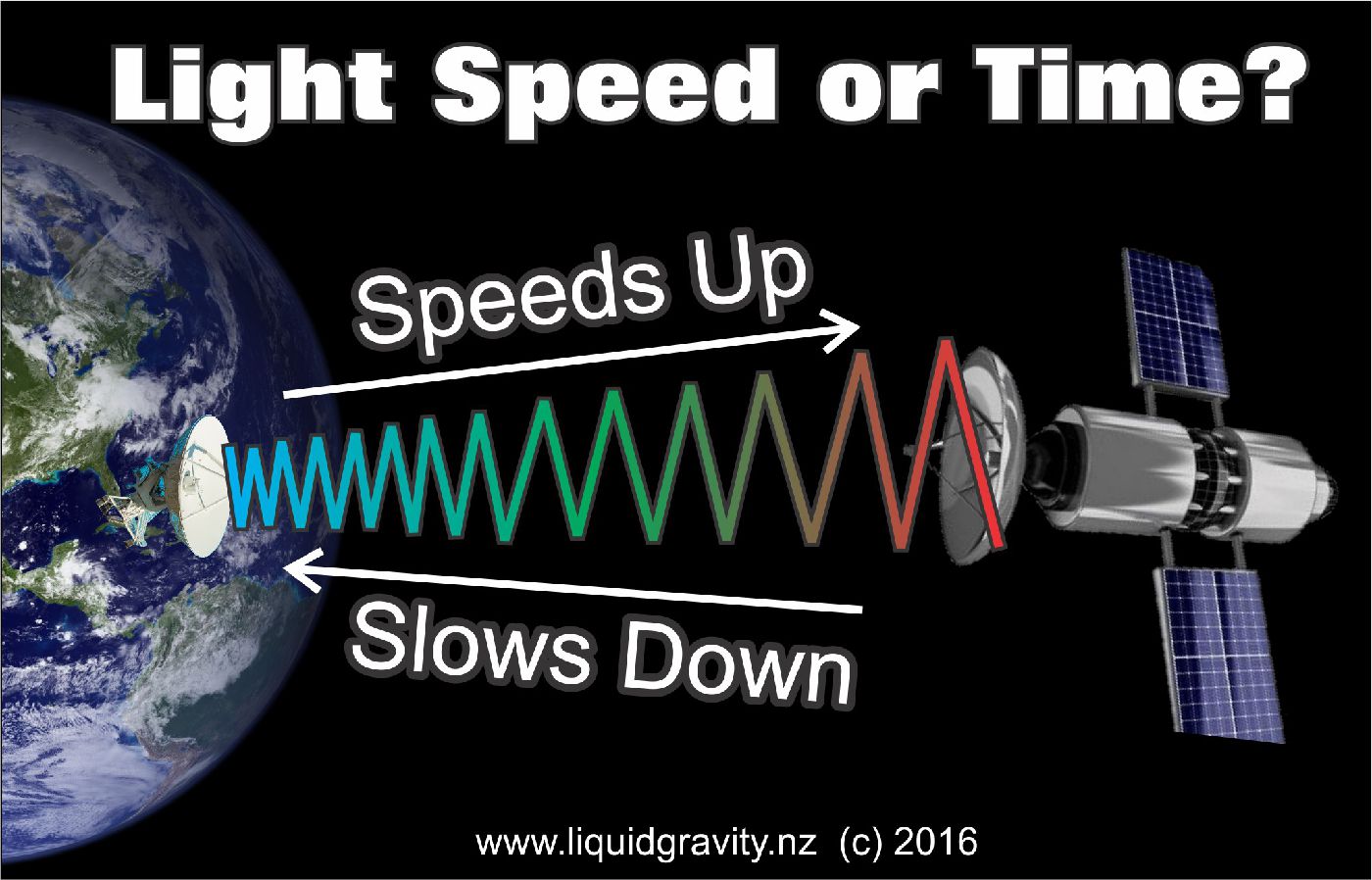
Gravity exerts a force on photons, even though it has no mass. This can distort the things we see if the light that reaches us is being distorted by gravity, as seen in the picture at the top of this post. The confusing aspect of this is that gravity affects this light even though the light has no mass. This is explained in Einstein’s Theory of Special Relativity that gravity is not pulling the light, but it is rather changing the geometry and physical laws of time and space around it. This means that the light that is affected by gravity is still moving in a straight line, but the planet or other massive object whose gravity is affecting it is changing what a straight line is. Also, rather than accelerating on its path when affected by gravity, light just changes in its frequency, because it always moves at a constant speed that does not change. This is what causes the blue shift and red shift in light. When moving towards the massive object, there would be a blue shift in the light because the frequency would increase, and if moving away from the massive object, there would be a red shift. Here is a video explaining this in more detail and here is the link to the picture.
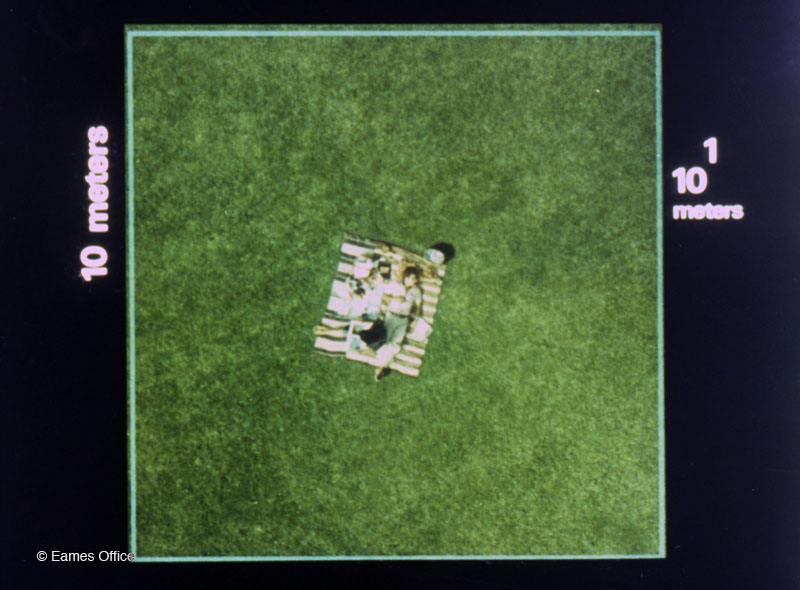
I think that the “Powers of Ten” video displayed not only conceptually how raising something to a power of ten affects it, but also the incredibly large scale of the universe. During the first half of the video when the perspective is going increasingly further away from the starting point, it seems as though the viewer’s perspective is moving very quickly away from the starting point until it reaches space past Earth. Once it increases to ten to the eighteenth meters away from the starting point and above it seems to be moving very quickly, which it is, but before that it takes a fairly long time to reach the first star closest to us. Another thing from the video that puts the scale into perspective is the size of the Sun when all of the orbits of our solar system come into view. When all of the orbits are within view, the Sun looks very small within the view of the screen, showing the expanse of the outermost orbits. This still is minuscule compared to the galaxy and especially the universe. Picture Source

This is an example post, originally published as part of Blogging University. Enroll in one of our ten programs, and start your blog right.
You’re going to publish a post today. Don’t worry about how your blog looks. Don’t worry if you haven’t given it a name yet, or you’re feeling overwhelmed. Just click the “New Post” button, and tell us why you’re here.
Why do this?
The post can be short or long, a personal intro to your life or a bloggy mission statement, a manifesto for the future or a simple outline of your the types of things you hope to publish.
To help you get started, here are a few questions:
You’re not locked into any of this; one of the wonderful things about blogs is how they constantly evolve as we learn, grow, and interact with one another — but it’s good to know where and why you started, and articulating your goals may just give you a few other post ideas.
Can’t think how to get started? Just write the first thing that pops into your head. Anne Lamott, author of a book on writing we love, says that you need to give yourself permission to write a “crappy first draft”. Anne makes a great point — just start writing, and worry about editing it later.
When you’re ready to publish, give your post three to five tags that describe your blog’s focus — writing, photography, fiction, parenting, food, cars, movies, sports, whatever. These tags will help others who care about your topics find you in the Reader. Make sure one of the tags is “zerotohero,” so other new bloggers can find you, too.

 A Blog of the Solar System